Chicago itineraries: 1, 2, or 3 days
Chicago rewards a plan. Its best attractions cluster in two tidy areas — the Loop and Magnificent Mile downtown, and the Museum Campus on the lakefront — which makes it easy to see a lot without wasting time in transit. Ready-to-use 1-day, 2-day, and 3-day itineraries for 2026, each built so a Chicago attractions pass naturally pays for itself.
At a glance
For a first visit, two to three days covers the essentials comfortably. One day gets you the skyline-and-Loop highlights; two adds the museums and the river; three lets you slow down for neighborhoods, food, and maybe a day trip.
Start here
First, match a pass to your trip length
Almost every itinerary below runs through the same handful of paid attractions, and buying them individually is the most expensive way to go. A pass usually saves 30–50% — if you pick the right one for how long you're staying. Here's the quick logic (our full CityPASS vs Go City comparison goes deeper):
- Chicago C3 — $109 adult / $79 child. Any 3 of nine top attractions, plus the Navy Pier Centennial Wheel. Best for a one-day blitz or a short, curated trip.
- Go City Explorer — from $109 (3 attractions, up to 7). Pick à la carte, 30 days to use it. Flexible — but note it has no Shedd Aquarium and no Art Institute.
- Chicago CityPASS — $144 adult / $114 child. Shedd and Skydeck are built in, plus three more choices. Best value for a two-to-three-day first visit built on the icons.
- Go City All-Inclusive — $149 (1 day) / $189 (2 days) / $229 (3 days). Unlimited attractions per day. Only worth it if you'll pack 3+ paid stops into every day — see the All-Inclusive verdict for the math.
- Go City Essentials — $99. A cheaper fixed 3-attraction bundle.
Two exclusives decide a lot: the Art Institute is only on CityPASS and C3, and the Shedd is not on the Go City Explorer or Essentials. Write your must-do list first, then pick the pass that carries it.
Worth adding to your itinerary
Other experiences you might enjoy
Every itinerary below leans on the same core lineup: Skydeck Chicago at the Willis Tower and 360 CHICAGO, the Shoreline architecture river cruise or the deeper Chicago's First Lady cruise, a Big Bus hop-on hop-off tour, Shedd Aquarium, the Field Museum, the Art Institute of Chicago, and a day at Navy Pier with the Centennial Wheel. The options below can help you build out your own plan.
Itinerary
One day in Chicago: "The Greatest Hits"
Best pass: Chicago C3 ($109), or Go City Essentials ($99) / 3-choice Explorer ($109). Pick three icons and you'll clear the pass's value in a single day.
Morning. Start at Willis Tower Skydeck right at 9 a.m. opening — with a timed or expedited entry to beat the lines — and step out onto The Ledge while the light is clean and the crowds are thin (pass attraction #1). Come back down and walk east into the Loop.
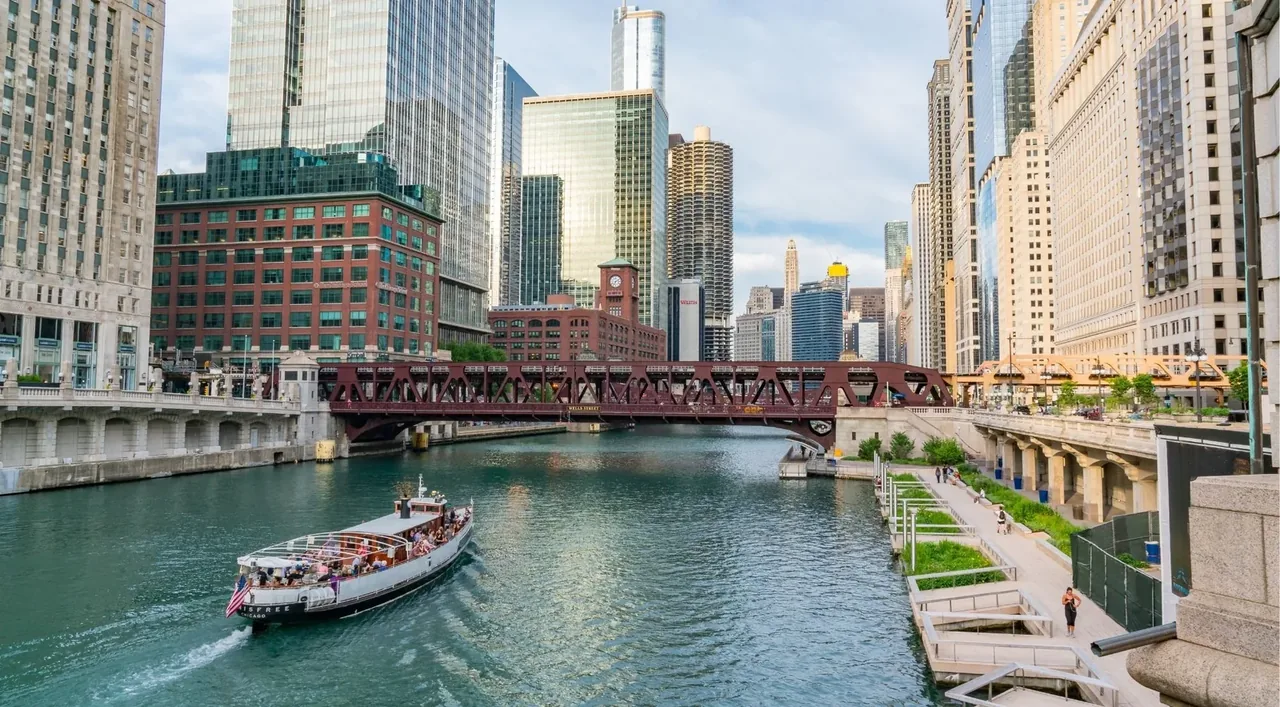
Midday. Grab a classic Italian beef (Al's or Portillo's — order it "dipped") or a Chicago-style hot dog, then board the architecture river cruise from the Michigan Avenue dock (pass attraction #2). Seventy-five minutes on the water is the single best orientation to the city — you'll understand Chicago's layout and skyline for the rest of your trip.
Afternoon. Stroll through Millennium Park (free) for Cloud Gate — "The Bean" — and the Crown Fountain. From here, choose your third pass attraction: the Art Institute of Chicago if you're on C3 (American Gothic, Nighthawks, the Impressionist wing), or up 360 CHICAGO on the Magnificent Mile for a second, different skyline view (pass attraction #3).
Evening. Walk the Magnificent Mile north to Navy Pier (free to enter) for the lakefront and skyline; on summer Wednesday nights the Centennial Wheel runs free rides after 6 p.m. Cap the day with deep-dish pizza at Lou Malnati's or Giordano's — the quintessential Chicago dinner.
Itinerary
Two days in Chicago: "Icons + Museums"
Best pass: Chicago CityPASS ($144 adult / $114 child). Shedd and Skydeck are built in; choose the river cruise, Field Museum, and 360 CHICAGO as your three picks and you'll approach ~50% savings.
Day 1 — Downtown & skyline
Open with Skydeck in the morning, then a Loop lunch. Take the architecture river cruise early afternoon, then wander Millennium Park and duck into the Chicago Cultural Center (free, and home to the world's largest Tiffany stained-glass dome). Time 360 CHICAGO for sunset — the Magnificent Mile setting means Willis Tower ends up in your photo — then have dinner in River North or the buzzy West Loop/Fulton Market dining scene.
Day 2 — The Museum Campus in one go
Here's the key efficiency move: the Field Museum, Shedd Aquarium, and Adler Planetarium sit side by side on the lakefront peninsula, so do all three in a single day and you'll barely travel.
Start at the Shedd Aquarium at 9 a.m. on a reserved slot (it's the busiest, so go first). Cross to the Field Museum for SUE the T. rex and the Egyptian halls. Finish at the Adler Planetarium for a sky show and what may be the best skyline-and-lake photo in the city, taken from its terrace. In the evening, walk Grant Park to Buckingham Fountain, then head to Chinatown (a short ride south) or the South Loop for dinner.
Itinerary
Three days in Chicago: "Add Depth"
Best pass: CityPASS if you're museum-heavy; a 5–7-choice Go City Explorer or a 2–3-day All-Inclusive if you move fast. The All-Inclusive runs $149 / $189 / $229 for 1 / 2 / 3 days and only makes sense at 3+ paid attractions a day.
- Day 1 — Loop & skyline: Skydeck → architecture cruise → Millennium Park & the Cultural Center → 360 CHICAGO → the Magnificent Mile.
- Day 2 — Museum Campus: Shedd → Field → Adler (as above), then out to Navy Pier in the evening for the Centennial Wheel (on C3 and Go City) and, in summer, the Wednesday or Saturday fireworks.
- Day 3 — Neighborhoods & your choice: Pick your depth. Head to the Griffin Museum of Science and Industry in Hyde Park (on all passes — the U-505 submarine and the Coal Mine are highlights) and pair it with a University of Chicago campus walk; or spend the morning at the Art Institute and the afternoon at the free Lincoln Park Zoo and Conservatory. Eat your way through Pilsen (Mexican), Fulton Market, or Chinatown, and end with a sunset walk or a Divvy bike ride along the Lakefront Trail.
Beyond 3 days
Four days or more?
A fourth day is when a day trip earns its place, or when you slow down for a leisurely neighborhood-and-food day — brunch in Wicker Park, a Cubs game at Wrigley Field in season, or the Theater District and a matinee.
Day trips from Chicago
These are add-ons for longer stays, not first-visit essentials:
- Oak Park (~15–20 min on the Green Line) — the world's largest concentration of Frank Lloyd Wright buildings, including his Home & Studio and Unity Temple.
- Indiana Dunes National Park (~1 hour by car or the South Shore Line) — Lake Michigan beaches and dune hikes.
- Milwaukee (~90 min via Amtrak's Hiawatha) — the Harley-Davidson Museum and lakefront Art Museum.
- Starved Rock State Park (~1.5–2 hours by car) — sandstone canyons and waterfalls.
- Lake Geneva, Wisconsin (~1.5 hours) — a relaxed lakeside resort town.
Logistics
Getting around Chicago (2026)
You don't need a car unless you're doing a day trip. Downtown is very walkable, and the CTA covers the rest:
- CTA "L" and buses: As of the February 1, 2026 fare update, a rail ride is $2.75 and a bus ride $2.50 with a Ventra card. Buy fares through the Ventra app — there's no cash on trains.
- Day passes: the 1-Day pass is $6 and the 7-Day pass is $25 (the old 3-Day pass was discontinued in 2026, so for 3+ active days the 7-Day is the cheapest per-day option).
- From the airports: the Blue Line runs 24/7 from O'Hare to the Loop in about 45 minutes; the Orange Line from Midway takes ~25–30 minutes (but doesn't run overnight).
- Divvy bikes: a Day Pass is $19.90 for unlimited 3-hour classic-bike rides in 24 hours — a great way to cover the Lakefront Trail.
- Water taxis: a scenic way to reach the Museum Campus or Navy Pier in good weather (roughly spring through December).
Timing
When to go
Chicago has four dramatic seasons. May and September–October are the shoulder-season sweet spots — mild weather, thinner crowds, better hotel rates. Summer is peak: warm, festival-packed, with free Navy Pier fireworks on Wednesday and Saturday nights, but also the most crowded and expensive. Winter is genuinely cold, so pivot the itinerary toward indoor attractions — the museums, observation decks, and aquarium are all excellent cold-weather picks, and passes work just as well in January as in July.
Make it work
Make your pass work: reservation logistics
A pass only saves you time if you plan the timed entries:
- Reserve the busy ones the moment you activate your pass — Skydeck, the Shedd, 360 CHICAGO, and the river cruise all take reservations in the pass app. Book the earliest morning slots to dodge lines.
- Do the Museum Campus in one day to eliminate cross-town travel, and put an observation deck at sunset for the best light.
- Lean on free anchors — Millennium Park, the Riverwalk, Navy Pier, the Cultural Center, Lincoln Park Zoo — to fill the gaps between paid stops without spending a cent.
- Mind the exclusives: if the Art Institute is a must, you need CityPASS or C3; if the Shedd is a must, avoid the Go City Explorer and Essentials.
FAQ
Frequently asked questions
How many days do you need in Chicago?
Two to three days is ideal for a first visit — one day for the skyline and Loop, a second for the museums and river, and a third to slow down for neighborhoods and food. A fourth day opens up a day trip.
What's the best Chicago pass for a one-day trip?
Chicago C3 ($109) or a 3-choice Go City Essentials/Explorer — pick three icons and you'll clear the pass's value in a day. For a single attraction, skip the pass and buy a ticket.
Which pass is best for 2 to 3 days?
Chicago CityPASS ($144 adult) is the strongest value for a first visit built on the icons, since Shedd and Skydeck are included plus three more. Fast-paced travelers who'll hit 3+ paid attractions a day can consider a 2–3-day Go City All-Inclusive.
Can I do the Field Museum, Shedd, and Adler in one day?
Yes — they're clustered on the Museum Campus peninsula, so doing all three in a day minimizes travel. Start at the Shedd at opening, since it's the busiest.
Do I need a car in Chicago?
No — downtown is walkable and the CTA "L" and buses cover the rest. You'd only want a car (or the train) for a day trip like Indiana Dunes or Starved Rock.
What Chicago food should I try?
Deep-dish pizza (Lou Malnati's, Giordano's, Pequod's), Italian beef (Al's, Portillo's), and a Chicago-style hot dog — plus the West Loop/Fulton Market, Pilsen, and Chinatown dining scenes.
When is the cheapest time to visit Chicago?
Winter (excluding the holidays) is cheapest for hotels but cold; the shoulder seasons of May and September–October offer the best balance of price, weather, and thinner crowds.
Should I book the architecture cruise or Navy Pier boat tours in advance?
Yes, in peak season. The Shoreline architecture cruise, Seadog speedboat, and other Navy Pier boat tours all take reservations in the pass apps and fill up on summer weekends — book your time slot the moment you activate your pass.
Bottom line
Cluster the museums, let a pass carry the paid stops
Build your Chicago trip around the two attraction clusters, cluster the Museum Campus into one day, and let a pass carry the paid stops. For one day, a C3 or 3-choice pass is plenty; for a classic two-to-three-day first visit, CityPASS usually wins. Reserve your Skydeck, Shedd, and cruise times as soon as you activate, fill the gaps with free anchors like Millennium Park and Navy Pier, and eat well. Start planning the individual stops with our guides to the architecture river cruise, Navy Pier boat tours, and the Willis Tower Skydeck.